The Rare Old Mountain Dew: Moonshine in the North Carolina Mountains
“I just wanna say a few words about North Carolina, my home state, possibly the finest state in this entire Union. We got industry of all kinds; pretty country; [we] raise corn, cotton, tobacco, peaches, peanuts, all like that. [We] got colleges all over the state, fine quality; pretty girls; and [we] run off the finest white lightning made anywhere! [Laughter] I see y’all ain’t forgot your raising.”
-Andy Griffith, “North Carolina, My Home State"
White lightning. Mountain dew. Panther’s breath. Moonshine.
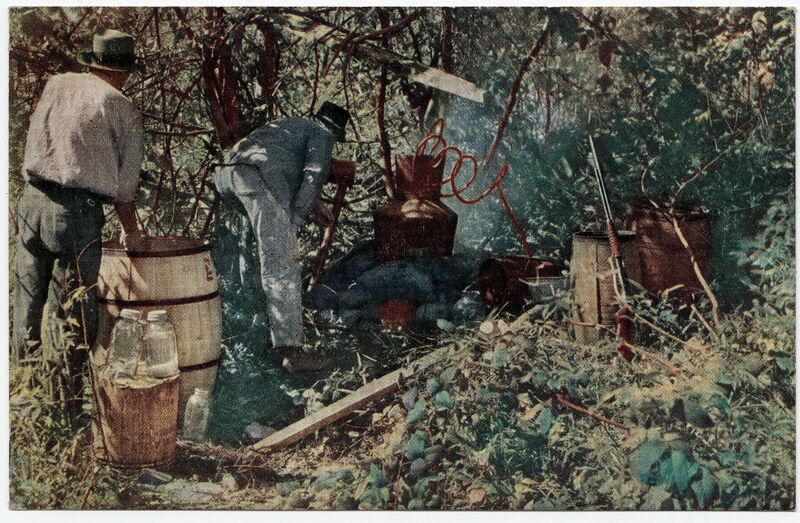
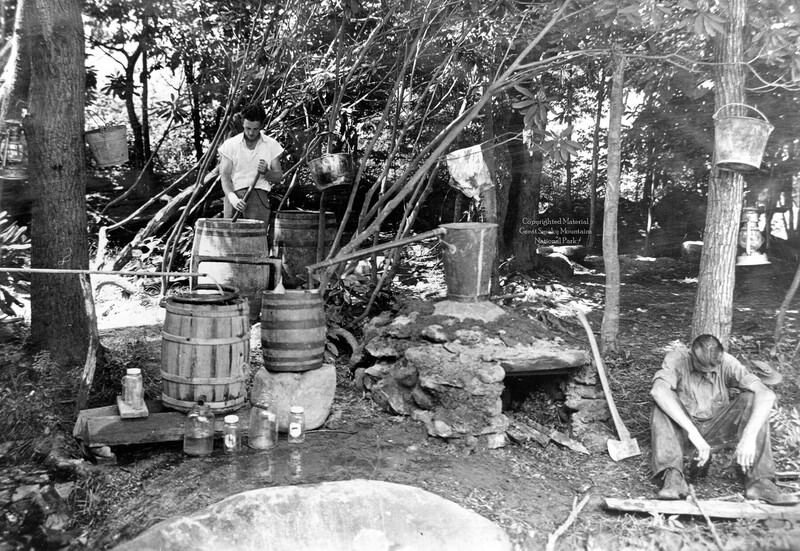
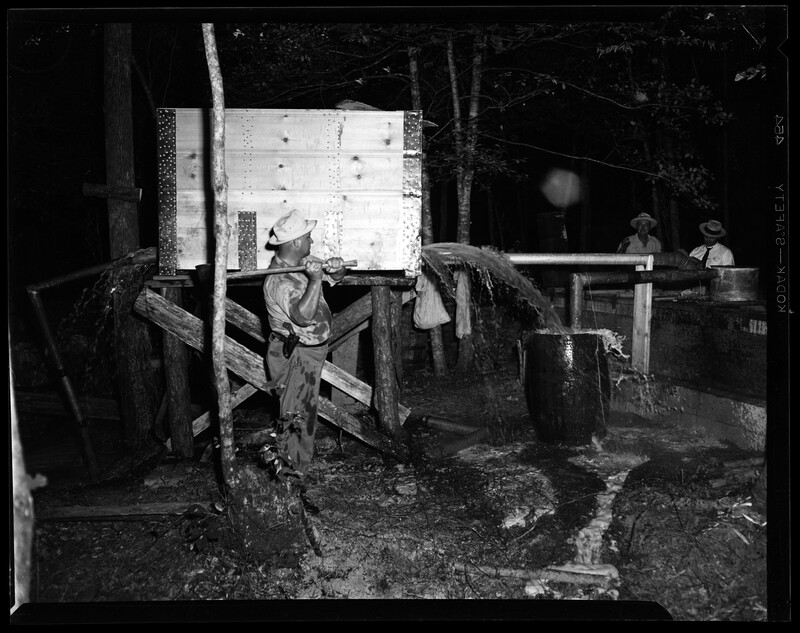
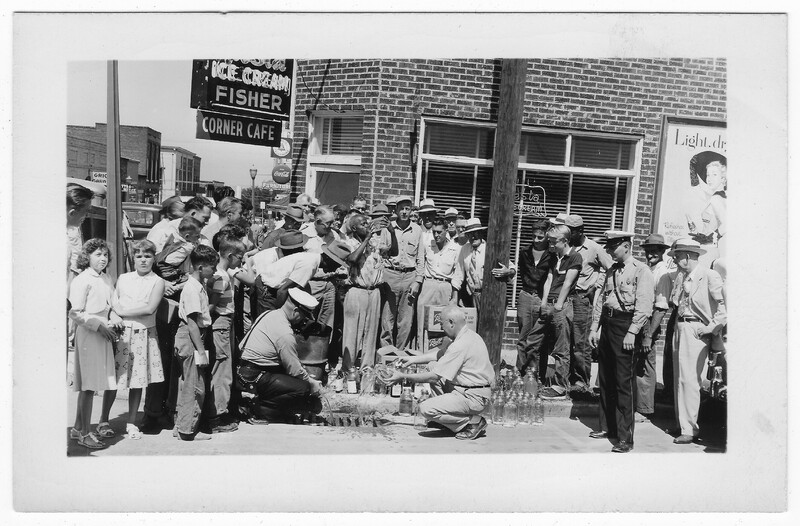
The words are every bit as potent as the liquor itself. They conjure up images of illicit stills, suspicious whiskey, daredevil bootleggers, and federal raids on secluded mountain hollers. Humans have crafted hard spirits for personal consumption (and public sale) for thousands of years, but few distilling traditions have captured the popular imagination like the moonshiners of the Appalachian Mountains and the American South. Over the last two centuries, the western mountains of North Carolina have developed a near-mythic reputation for the distilling and distribution of forbidden spirits, and no discussion of that region’s history would be complete without it. Alternatively beloved and reviled, moonshine is inextricable from the economic, social, and cultural fabric of western North Carolina, from its origins in domestic agriculture, its expansion into a criminal enterprise, and into its modern (legalized) revival in craft distilleries.
A Brief History of the Term “Moonshine”
Although exact definitions differ, “moonshine” traditionally refers to any unaged clear liquor produced outside of any government regulation. Popular belief maintains that it acquired its name from its secretive, late-night production in the dead of night, it is more likely that the term evolved from its murky origins and unreliability. In eighteenth-century Britain, “moonshine” had come to mean something insubstantial or unfulfilling, despite a promising or enticing appearance, and by the 1780s had also acquired an alcoholic association. The first recorded usage of “moonshine” to refer to illicit alcohol dates to 1785, when the lexicographer Francis Grose published his Classical Dictionary of the Vulgar Tongue with the following entry: “A matter or mouthful of moonshine; a trifle, nothing. The white brandy smuggled on the coasts of Kent and Sussex, are also called moonshine.”[1] This term traveled to America as well via Scottish, Irish, and Scots-Irish (Ulster Scots) immigrants to the southern Appalachian Mountains, who brought their own long history of whiskey distilling with them to North Carolina.
Early North Carolina Distilling & Cash in Hand
Liquor was an integral component to the economy and social life of North Carolina from the earliest days of the European colony. Whiskey, brandy, and other home-distilled spirits were often accepted in trade or sold to pay mortgages or property taxes. Liquor was plied at all levels of social gatherings, on campaign trails, and at communal celebrations from baptisms to barn raisings to funerals. Small yeoman farmers built localized networks of trade, while wealthy planters sometimes placed fully equipped distilleries on their property to supplement their cash crop income. These larger-scale operations were often operated by skilled enslaved distillers, who integrated African and Caribbean distilling traditions with indigenous and European ones.[2]
While federal excise taxes on liquor existed at varying times over the colonial period and the early American Republic, the bitter conflicts they generated had little to no impact in North Carolina. The state remained unaffected by the Whiskey Rebellion (1791-1794), when discontented Pennsylvania farmers took up arms to protest the first federal whiskey tax under President George Washington, and unsanctioned distilling in North Carolina went more or less unremarked upon until after the Civil War.[3] It was only in the 1870s, after an increased excise tax on liquor, expanding industrialization, and a more consistent federal authority brought North Carolina distillers into direct conflict with government officials, or “revenuers.” In the eyes of the newly formed Federal Revenue Bureau, anyone that refused to pay the liquor taxes was directly stealing from the federal government.
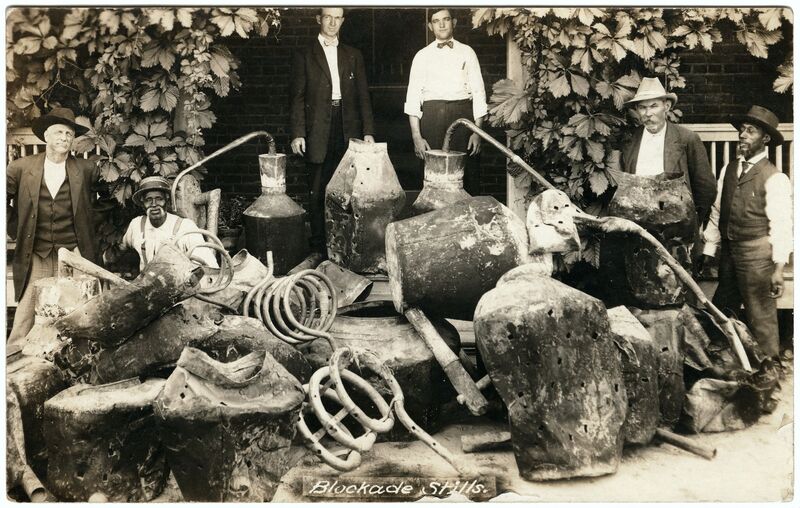
In cash-strapped and dispersed mountain communities, however, moonshine was often the fastest and most consistent way to get cash-in-hand. For example, in Macon County, North Carolina, isolated by mountainous geography and insufficient infrastructure, farmers rarely earned more than $50 in cash per year.[4] By comparison: if a typical homesteader in 1881 converted 40 bushels of his corn crop into approximately 120 gallons of whiskey, he could sell them without a revenue stamp for $1.10 a gallon and walk away with at least $150.[5] When faced with the choice of losing more than half of their profits paying excise taxes and shipping expenses or illegally selling moonshine, most North Carolinians chose to turn outlaw.
“My Crops, My Labor, My Liquor, My Mouth, My Business”
Bootlegging transcended typical borders of race, class, and gender. The majority of moonshiners were white men, but there are many accounts across the South of Black and Native American bootleggers, as well as women of all races. By 1900, nearly a quarter of all North Carolina moonshiners were Black, including both of James Oats, Jr.’s grandfathers.[6] “My grandfather built three houses,” Oats, Jr., told filmmaker David Weintraub in an interview for the documentary The Spirits Still Move Them (2021). “Back in them days there wasn’t too much stuff Black people could build and say ‘This is mine, I own this’ . . . . But they were able to do these things by bootlegging.”[7]
In a 2010 oral history interview with Western Carolina University, celebrated Cherokee basket weaver Geraldine Walkingstick similarly reminisced about how her father and others distilled moonshine to make ends meet. “. . . [A]ll these years he made liquor to get so we could have something to eat,” Walkingstick recalled. Once her father was tipped off that he would be raided by revenuers, so Walkingstick and her siblings “helped him carry his liquor out to the beehives, the empty ones . . . and they came to raid and they couldn’t find nothing.”[8]
For many, the act of distilling liquor and acquiring wealth in spite of government interference was not just a livelihood, but an act of resistance. Whether still smarting from the Confederate defeat in the American Civil War or just a firm believer in the axiom of “my crops, my labor, my liquor, my mouth, my business,” many North Carolinian bootleggers saw moonshining as an assertion of their economic and political independence.
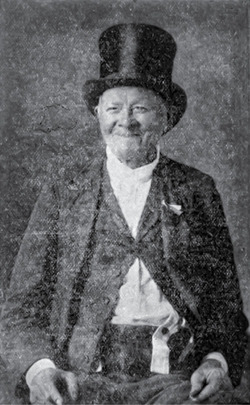
One such bootlegger was Amos Owens of Rutherford County. A Confederate veteran and Ku Klux Klan leader who swore to never pay a federal liquor tax, Owens was a colorful character known for his specialty “cherry bounce,” a potent combination of corn whiskey, cherries, and sourwood honey.[9] The so-called “Cherry Bounce King” built a bootlegging empire that reached west to the Mississippi River, and while he appeared in federal court several times and served three separate prison sentences, Owens was friendly with and even admired by many of the lawmen responsible for arresting him. The larger-than-life moonshiner endeared himself to his community by throwing an annual cherry bounce festival every summer; for twenty-five cents a plate, guests could drink, dance, and make merry for as long as the food and the money lasted.[10] M.L. White, an admiring schoolteacher from Polksville, North Carolina, rapturously wrote of Owens’s mountain home: “Here could be breathed the pure air of heaven . . . The home of the cow, honeybee, pure water and invigorating mountain air, and not excelled on earth for the fruit tree and the vine. Amos said here would he build a castle like the baron of feudal times, and here should be the land of milk and honey, peach and honey, and the abiding place of cherry bounce.”[11]
Folk Heroes and Fast Cars
As moonshine cemented itself in the economic foundation of 19th- and 20th-century North Carolina, it also became a cultural touchstone throughout the wider American consciousness. Jazz, blues, and folk songs celebrating the joys (and lamenting the ills) of moonshine were incredibly popular, and novelists, playwrights, and filmmakers all found the romantic character of the devil-may-care bootlegger a rich vein of creative inspiration. The anti-establishment bravado, the clever evasion of authority, and the fierce commitment to personal freedom and self-determination afforded the popular vision of a bootlegger a folk hero status akin to Robin Hood, Reynard the Fox, or Br’er Rabbit. Moonshine became a uniquely Southern flavored phenomena, running like water through Southern cultural products like Thunder Road (1958), The Beverly Hillbillies (1962-1971), Smokey and the Bandit (1977), The Dukes of Hazzard (1979-1985), spoken comedy by Andy Griffith and others, outlaw country music, and more.
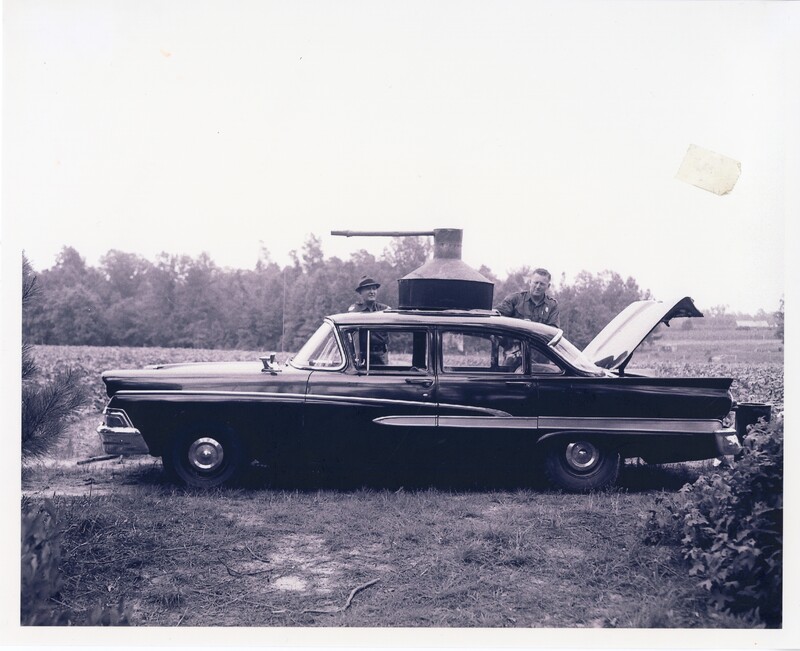
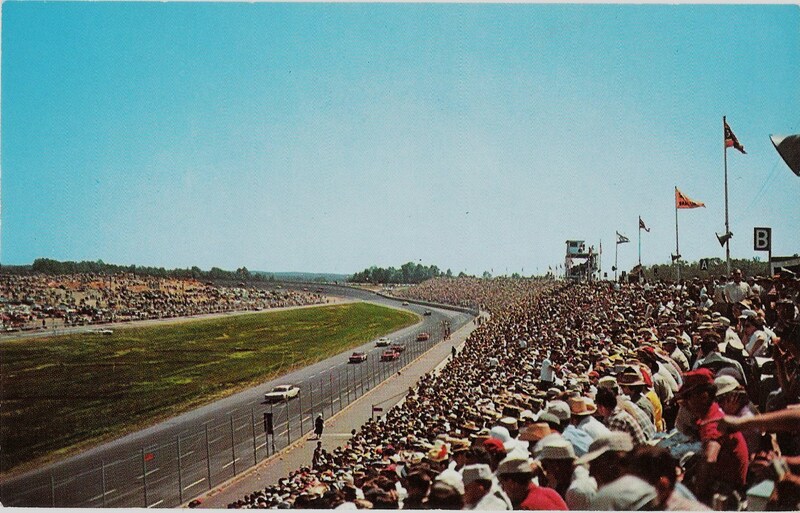
Perhaps the most unique cultural descendant of North Carolina’s moonshine history is the popularity of stock car racing in the state. Originating from bootleggers’ need to augment and upgrade their getaway vehicles without attracting undue attention, stock car racing initially became popular in the South before World War II. However, it truly took hold in North Carolina in 1946-1947, when well-known race promoter Bill France moved his summer racing headquarters from Florida to Winston-Salem, NC, and partnered up with several Wilkes County bootleggers to build the North Wilkesboro Speedway, which almost immediately attracted 70,000 fans.[12] The largest governing body in stock car racing, NASCAR, was created soon after and had its inaugural races in Daytona Beach, Florida, and Charlotte, North Carolina in 1948 and 1949. Although it has had financial difficulties in recent years, NASCAR reported $1.7 billion in revenue for 2024 and remains an economic stronghold in the Charlotte metro area.
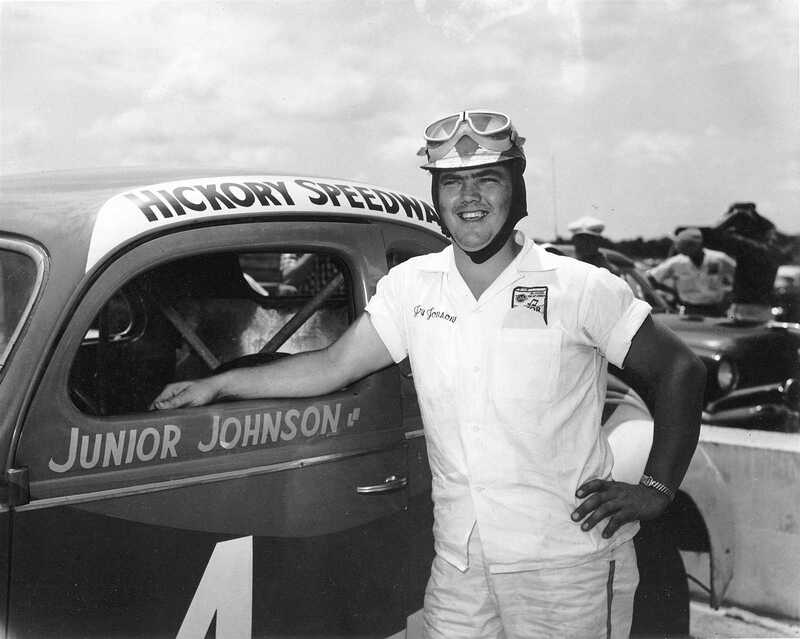
Not only did the moonshine business pay for much of NASCAR’s initial foundation in North Carolina, but it also provided the sport with some of its earliest stars. The most famous of these bootleggers-turned-racers was Junior Johnson, who was born and raised in a moonshining family in Wilkes County. By his own admission, Johnson “hauled quite a bit of whiskey in [his] day” before realizing that he could make more money racing cars than making moonshine.[13] Johnson started racing for NASCAR full time in 1955 with great success, but his 1956 season was interrupted by federal agents, who arrested him while he was firing up his father’s moonshine still. Johnson served a year in federal prison for bootlegging, after which he returned to racing for seventeen years, winning scores of local races, fifty races on the NASCAR Grand National Circuit, and the Daytona 500.[14] He always remained proud of his moonshining roots, even after receiving a presidential pardon from President Ronald Reagan in 1986, which removed his 1956 conviction and restored his right to vote.
The Moonshine Revival
While the heyday of illicit distilling has faded, moonshine is still very much present in the cultural (and criminal) fabric of North Carolina. Rigid liquor laws have been relaxed in recent years—in 2025, Alcohol Beverage Control (ABC) stores were allowed to open on Sundays!—but unlicensed home distilling is still considered a crime in the state and North Carolina’s Alcohol Law Enforcement agency stays busy. In 2017, two people in Elizabethtown, NC, were arrested for selling moonshine via Facebook; in 2022, police found nearly 200 bottles of illegal moonshine in a suspect’s Lexington home; and in March 2026, a joint raid between ALE and the Johnston County Sheriff’s Office uncovered nearly $200,000, several hundred grams of cocaine and crystal meth, illegal gambling machines, and 58 gallons of moonshine. While unlicensed liquor has started to shed its worst criminal associations, it remains illegal and is often found with other contraband.
In a number of ways, however, North Carolina moonshine has gone legitimate. As the taste for craft alcohol expanded in the United States, popular awareness of moonshine and distilling grew. The Discovery Channel show Moonshiners has run for fourteen seasons as of 2026, and the life of featured bootlegger Popcorn Sutton has inspired a mini-moonshine industry all on its own. In this growing popularity, a number of North Carolina distilleries have capitalized on loosening liquor restrictions, increased tourism around the alcohol industry, and the state’s reputation for outlaw bootlegging to produce lines of “legal moonshine.” Bottled at anywhere from 40- to 130-proof—certainly strong, but well within legal limits—these spirits are a fascinating glimpse into how the history of illicit distilling has seeped into the cultural consciousness of North Carolina.
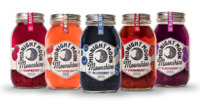
Sporting Mason jar packaging and folksy names, while also citing family traditions, handed-down recipes, and locally-grown ingredients, these sanctioned versions of moonshine are clearly designed to evoke the history and mystique of their illegal counterparts. Piedmont Distillers (Madison, NC), North Carolina’s first legal distillery since the end of Prohibition, produces several lines of spirits, including Catdaddy Spiced Moonshine and Midnight Moon, which offers several Southern flavors like watermelon, peach, and peanut butter, and was licensed and endorsed by Junior Johnson himself. Call Family Distillers in Wilkesboro take inspiration from their own family history: their flagship moonshine is named after founder Brian Call’s father, Willie Clay Call “the Uncatchable”, a renowned Wilkesboro bootlegger famous for his souped-up getaway cars. Old Nick Williams Farm & Distillery, a contemporary revival of a historic whiskey distillery, produce what they call Carolina whiskey, a “pre-Prohibition” recipe for clear grain whiskey. These are just a sample of the many distilleries in the state that are seeking to revive a North Carolina moonshine tradition and situate it in the larger world of distilled spirits. Moonshine may be ephemeral and fleeting, but it also endures in North Carolina.
Footnotes
[1] Kevin R. Kosar, Moonshine: A Global History, Edible (Reaktion Books, 2017), 16.
[2] Daniel S. Pierce, Tar Heel Lightnin’: How Secret Stills and Fast Cars Made North Carolina the Moonshine Capital of the World (The University of North Carolina Press, 2019), “Introduction: White Lightnin’”, ebook
[3] Pierce, Tar Heel Lightnin’, “Introduction: White Lightnin’”, ebook.
[4] Wilbur R. Miller, Revenuers & Moonshiners: Enforcing Federal Liquor Law in the Mountain South, 1865 - 1900 (University of North Carolina Press, 1991), 27.
[5] Miller, Revenuers & Moonshiners, 28.
[6] Miller, Revenuers & Moonshiners, 36.
[7] David Weintraub, “Lewis Oats, Jr.,” (Clyde, NC), undated, Video, https://vimeo.com/1165437646.
[8] Tonya Carroll, “Geraldine Walkingstick: Cherokee Basket Maker,” (Mountain Heritage Center, Cherokee, NC), February 5, 2010, Western Carolina University, https://southernappalachiandigitalcollections.org/object/11656.
[9] Joseph Earl Dabney, Mountain Spirits: A Chronicle of Corn Whiskey from King James’ Ulster Plantation to America’s Appalachians and the Moonshine Life (Scribner, 1974), 93.
[10] Dabney, Mountain Spirits, 96-97.
[11] Dabney, Mountain Spirits, 96.
[12] Pierce, Tar Heel Lightnin’, “Chapter 13: North Carolina Moonshine, NASCAR, and the ‘Bootlegger Tracks’”, ebook.
[13] Warren Moore, “Interview with Junior Johnson,” (Ronda, NC), December 3, 1984, Southern Oral History Collection, Wilson Library, UNC-Chapel Hill, https://dcr.lib.unc.edu/record/e1aaaa82-21ce-403c-a431-614dc210326c.
[14] Pierce, Tar Heel Lightnin’, “Chapter 13: North Carolina Moonshine, NASCAR, and the ‘Bootlegger Tracks’”, ebook.
Bibliography
Carroll, Tonya. “Geraldine Walkingstick: Cherokee Basket Maker.” (Mountain Heritage Center, Cherokee, NC), February 5, 2010. Western Carolina University. https://southernappalachiandigitalcollections.org/object/11656.
Dabney, Joseph Earl. Mountain Spirits: A Chronicle of Corn Whiskey from King James’ Ulster Plantation to America’s Appalachians and the Moonshine Life. Scribner, 1974.
Kosar, Kevin R. Moonshine: A Global History. Edible. Reaktion Books, 2017.
Miller, Wilbur R. Revenuers & Moonshiners: Enforcing Federal Liquor Law in the Mountain South, 1865 - 1900. University of North Carolina Press, 1991.
Moore, Warren. “Interview with Junior Johnson.” (Ronda, NC), December 3, 1984. Southern Oral History Collection. Wilson Library, UNC-Chapel Hill. https://dcr.lib.unc.edu/record/e1aaaa82-21ce-403c-a431-614dc210326c.
Pierce, Daniel S. Tar Heel Lightnin’: How Secret Stills and Fast Cars Made North Carolina the Moonshine Capital of the World. The University of North Carolina Press, 2019.
Pockrass, Bob. “NASCAR Financials Revealed: Inside Profits, Losses, Charter Payouts.” FOX Sports, November 11, 2025. https://www.foxsports.com/stories/nascar/nascar-financials-revealed-profits-losses.
Weintraub, David. “Lewis Oats, Jr.” (Clyde, NC), undated. Video. https://vimeo.com/1165437646.


